


Professional arnica gel: properties, benefits, and how to choose the right one
8
Jul
Professional arnica gel: properties, benefits, and how to choose the right one
July 08, 2026
Arnica gel is one of the most widely used products in physiotherapy and sports thanks to its soothing and decongestant properties, fast absorption, and lightweight, non-greasy texture, which makes it easy to apply in the clinic or after training.
In this guide, we explain how it works, the situations in which it is most useful, and the criteria to consider when choosing the most suitable arnica gel according to its concentration, formulation, and the purpose of the treatment.

What is arnica gel and what are its properties?
Arnica gel is a topical preparation made with Arnica montana extract, a medicinal plant whose main active compound, helenalin, gives it a recognised ability to soothe muscle discomfort and help reduce mild inflammation.
Unlike creams, gel has a lighter base and is quickly absorbed into the skin, making it particularly practical for frequent applications in the clinic or after physical activity.
From a physiotherapy perspective, arnica promotes blood circulation in the application area, thereby helping the reabsorption of bruises and relieving muscle and joint discomfort.
Benefits of arnica gel in physiotherapy and sports
Including arnica gel in a treatment protocol or sports recovery programme offers numerous benefits:
- Helps relieve muscle and joint discomfort by reducing feelings of tension and fatigue.
- Promotes the reabsorption of bruises and improves the appearance of minor contusions.
- Its lightweight, non-greasy, fast-absorbing texture is ideal for sessions involving several patients.
- Provides an immediate refreshing sensation that improves comfort after physical exertion.
- Suitable for daily use in cases of muscle fatigue or postural strain.
When is arnica gel recommended?
Arnica gel is particularly suitable in the following situations:
- After intense physical exertion, demanding training sessions, or competition, to support muscle recovery.
- For knocks, bruises, or mild muscle strain, where it helps reduce inflammation and relieve discomfort.
- As a complementary product between physiotherapy sessions in cases of muscle tension or accumulated fatigue.
- For tired legs, postural fatigue, or minor everyday muscle strain, including in people who do not practise sport.
We do not recommend applying arnica gel to open wounds, mucous membranes, or damaged skin. During pregnancy, breastfeeding, or when using it on children, prior advice from a healthcare professional is recommended.

Arnica gel or arnica cream: what are the differences and which should you choose?
Although they contain the same main active ingredient, arnica gel and arnica cream meet different needs in clinical practice.
| Criterion | Arnica gel | Arnica cream |
|---|---|---|
| Texture and absorption | Lightweight, non-greasy texture with fast absorption | Richer, more emollient texture with gradual absorption |
| Recommended use | After exercise and for occasional or frequent applications | Prolonged therapeutic massages |
| Sensation during application | Refreshing sensation and lightweight texture | Soothing and nourishing effect without a pronounced cooling sensation |
| Typical context of use | Sports, muscle recovery, and several applications per day | Physiotherapy clinics and longer massage sessions |
This difference is essential when planning a treatment, as the two formats can be used together depending on the stage of recovery, as explained in our article on the anti-inflammatory and analgesic properties of arnica.
Concentrations and formulations: how to choose the most suitable arnica gel
Not all arnica gels are the same. To choose the most suitable product for each patient or athlete, it is important to consider its formulation.
- Pure arnica gel: recommended when a targeted soothing and decongestant action is required without combining it with other active ingredients.
- Arnica gel with devil’s claw: combines the benefits of arnica with those of devil’s claw, providing a more comprehensive action that is particularly suitable after intense physical exertion.
- Arnica body gel with menthol and camphor: combines arnica with menthol and camphor to provide a more pronounced refreshing sensation, particularly appreciated in cases of generalised muscle fatigue.
Pack size is also an important consideration for professional use. Large 1,000 ml containers are particularly suitable for clinics and centres that treat a high number of patients, while 100 ml or 200 ml formats are more practical for personal use or travel.
How should arnica gel be applied correctly?
To make the most of its properties, we recommend following these guidelines:
- Apply a moderate amount of gel to the affected area, avoiding wounds, mucous membranes, and the area around the eyes.
- Massage the product gently into the skin until it is completely absorbed.
- For sports recovery, apply it preferably after physical exertion.
- In a physiotherapy clinic, it can be used as a complementary product after manual therapy or between sessions.
- Wash your hands after application and avoid contact with irritated or sensitised skin.
Our recommendation
At Telic, we work with OXD Arnica + Devil’s Claw Recovery Gel, a formula that combines these two active ingredients to support muscle recovery. Its lightweight texture and fast absorption make it particularly suitable after intense training sessions or prolonged physical activity.
For centres that treat a high number of patients, it is also available in a 1,000 ml format as OXD Arnica + Devil’s Claw Recovery Gel 1,000 ml, while the 100 ml format is more practical for personal use or travel.
Discover the OXD Arnica + Devil’s Claw Recovery Gel 100 ml here.
For a more pronounced refreshing effect, we recommend OXD Arnica Body Gel 500 ml, enriched with menthol, camphor, and lavender essential oil.
For longer therapeutic massage sessions where skin hydration and massage glide are prioritised, we recommend complementing the treatment with our Arnica Massage Cream 500 ml.
Conclusion
Arnica gel is a versatile and effective solution for both physiotherapy clinics and sports settings. Thanks to its ability to soothe muscles, fast absorption, and ease of use, it is an excellent complement to recovery protocols.
Choosing the most suitable formulation and format, and combining it when necessary with other products such as arnica cream, makes it possible to adapt the treatment to each patient’s needs and every stage of recovery.
At Telic, we offer a range of arnica gel formulations specifically designed to meet the needs of professionals.
Frequently asked questions
What is arnica gel and what is it used for?
Arnica gel is a topical preparation made with Arnica montana extract and recognised for its soothing properties. It is used to relieve knocks, bruises, and muscle discomfort while supporting recovery in the affected area.
When is arnica gel recommended?
We recommend applying it after intense physical exertion, for knocks or mild muscle strain, and as a complementary product between physiotherapy sessions.
What is the difference between arnica gel and arnica cream?
Gel has a lighter texture and is quickly absorbed, making it ideal for frequent use or after physical activity. Cream has a richer texture and is particularly suitable for prolonged therapeutic massages.
Is arnica gel with devil’s claw more effective?
The combination of arnica and devil’s claw enhances the soothing properties of the formulation and supports muscle recovery. It is generally recommended in cases of more significant muscle fatigue or strain.
Can arnica gel be used every day?
Yes, it can generally be used daily. However, it should not be applied to irritated skin, open wounds, or mucous membranes.
Does arnica gel have a cooling effect?
Arnica gel does not produce an intense cooling effect. Its action is gradual and soothing, unlike cooling gels specifically formulated with a high concentration of menthol.
Can arnica gel be used during pregnancy?
We recommend consulting a healthcare professional before using an arnica-based product during pregnancy or breastfeeding.
Does arnica gel replace physiotherapy treatment?
No. Arnica gel can be a useful complement for relieving mild muscle discomfort, but it does not replace diagnosis or treatment by a healthcare professional.
Related Products
-
 OXD replenishing gel arnica + harpagophytum - 1000 ml€39.91 VAT included
 -

-


Recent Posts
-
Professional Moisturizing Creams: Hyaluronic Acid, Collagen and Aloe Vera for Beauty Clinics
 September 1, 2026
 -
Heat Cream for Physiotherapy: How It Works and When to Apply It
 August 3, 2026
 -
Professional arnica gel: properties, benefits, and how to choose the right one
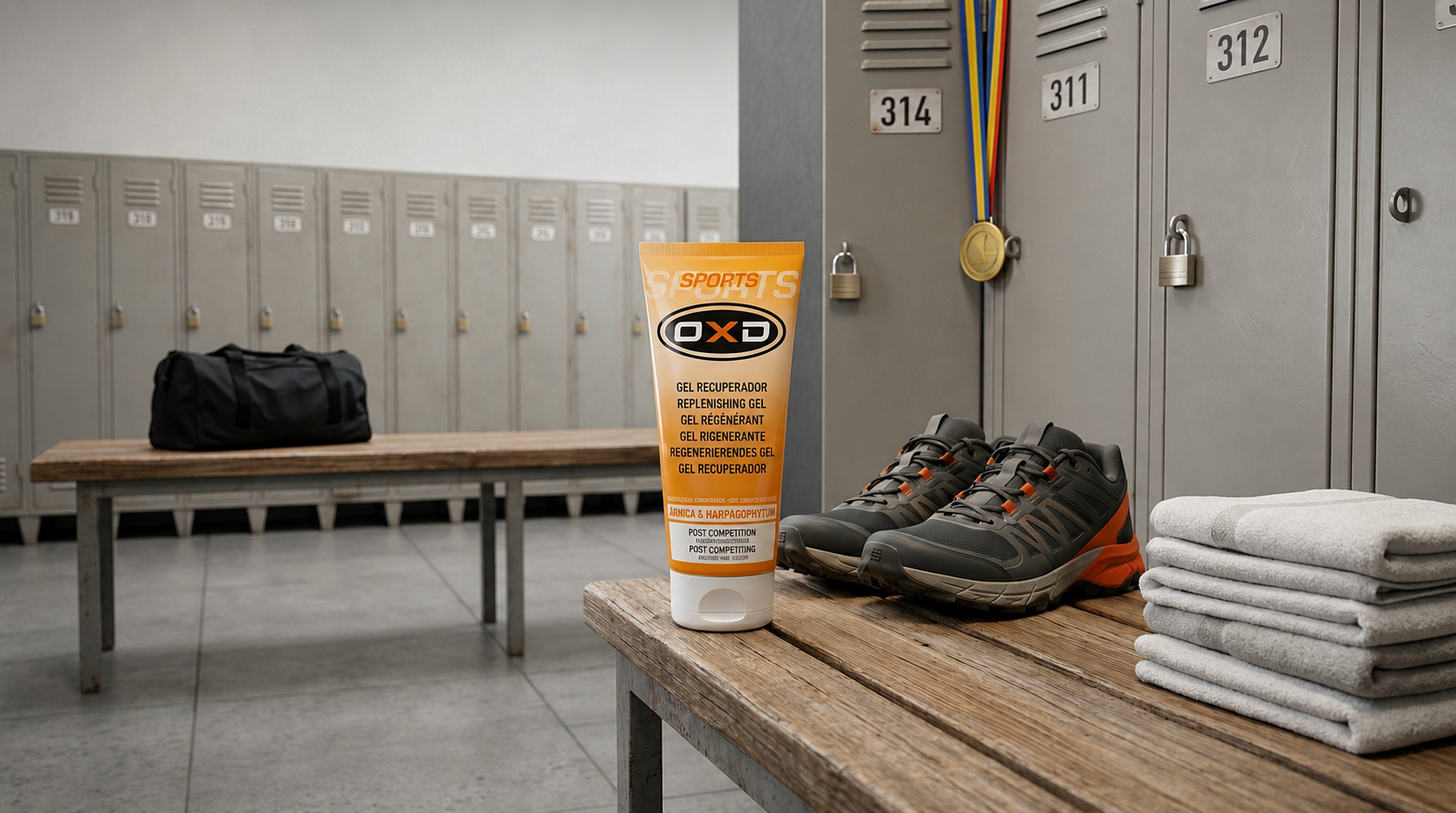 July 8, 2026
 -
Anti-Cellulite Treatments: What Really Works and How to Apply Them in the Treatment Room
 June 8, 2026
 -
Warm roll-on wax for professional hair removal: types and how to choose the right one for your salon
 May 6, 2026


