


Heat Cream for Physiotherapy: How It Works and When to Apply It
3
Aug
Heat Cream for Physiotherapy: How It Works and When to Apply It
August 03, 2026
In physiotherapy, heat cream is one of the most commonly used products for preparing muscle tissue before manual therapy or supporting work on muscle tightness and areas of accumulated tension.
Its warming action promotes local vasodilation, improves tissue elasticity, and enhances glide during massage, making it a valuable tool in clinical practice. In this guide, we explain how heat cream works, the benefits it provides, and the most appropriate moments to apply it during treatment.

What Is Heat Cream and How Does It Work on Muscles?
Heat cream is a topical formulation that combines thermoactive ingredients—such as camphor, methyl salicylate, or Vanillyl Butyl Ether—with oils and emollients that improve glide during massage.
When applied to the skin, these active ingredients create a controlled warming sensation that stimulates skin receptors and triggers a vascular response. Blood vessels in the treated area dilate, increasing local blood circulation and improving the delivery of oxygen and nutrients to muscle tissue.
This warming effect not only provides immediate comfort but also prepares muscle fibres for manual therapy. Better blood flow and increased tissue temperature improve muscle elasticity, allowing physiotherapists to perform treatment techniques more effectively and comfortably.
Benefits of Heat Cream in Physiotherapy
Including heat cream as part of a physiotherapy treatment protocol offers several advantages that can improve the overall treatment experience:
- Stimulates local blood circulation and enhances oxygen delivery to muscle tissue.
- Helps reduce muscle stiffness and improves tissue elasticity before deep manual therapy.
- Improves glide during massage, allowing more precise and comfortable treatment.
- Helps relieve muscle tension before exercise or manual therapy.
- Provides an immediate feeling of warmth and comfort, enhancing the patient's treatment experience.
When Should Heat Cream Be Applied?
Applying heat cream at the right time is essential to maximise its effectiveness.
We generally recommend using heat cream in the following situations:
- Before physical activity or a physiotherapy session involving deep manual techniques, to prepare muscles and reduce the risk of overload.
- For chronic muscle tension or contractures, where warmth helps relax muscle fibres before treatment.
- In cold environments, or when patients arrive with particularly cold or stiff muscles.
- As part of an athlete's warm-up routine, before training sessions or competition.
We do not recommend applying heat cream during acute inflammatory conditions, on recent injuries, open wounds, mucous membranes, or irritated skin. In these situations, cold therapy is generally the more appropriate treatment option.
Heat Cream vs. Cold Gel: Key Differences and When to Use Each
One of the most common questions in physiotherapy is when to use heat and when to use cold.
Although both therapies play an important role in muscle recovery, they serve different purposes and are often used at different stages of treatment.
| Criteria | Heat Cream | Cold Gel |
|---|---|---|
| Vascular effect | Promotes vasodilation | Promotes vasoconstriction |
| Recommended use | Before treatment or exercise | After exercise or during the inflammatory phase |
| Main purpose | Prepares muscles and relieves tension | Helps reduce inflammation and muscle fatigue |
| Not recommended for | Acute injuries, open wounds, irritated skin | Patients with cold hypersensitivity |
In fact, many recovery protocols combine both approaches: heat before physical activity or treatment to prepare the muscles, and cold afterwards to support recovery and reduce inflammation, as explained in our guide to heat and cold therapy in modern physiotherapy.
How to Apply Heat Cream Correctly
Proper application plays an important role in achieving the best therapeutic results.
We recommend following these steps:
- Clean the skin before application to ensure optimal absorption.
- Apply a moderate amount of heat cream, adjusting the quantity according to the size of the treatment area.
- Massage the cream into the skin using circular or upward strokes to stimulate circulation and help the active ingredients penetrate the tissue.
- Once the warming effect has developed, continue with the planned manual therapy or massage technique.
- Avoid applying the product to open wounds, mucous membranes, or damaged skin, and wash your hands thoroughly after use.

Our Recommendation: OXD Intense Heat Cream
At Telic, we recommend OXD Intense Heat Cream, specifically formulated to activate muscles before physical activity or physiotherapy sessions involving deep manual techniques.
Its long-lasting warming effect is achieved through a combination of methyl salicylate, camphor, and Vanillyl Butyl Ether, making it a trusted choice for physiotherapists, sports therapists, trainers, and sports recovery centres.
A convenient 100 ml format is also available, making it ideal for occasional treatments or for professionals who need a portable solution in their therapy bag.
For those looking for a gentler warming sensation, we also recommend OXD Mild Heat Massage Cream, an excellent option for professional massage treatments and for patients with more sensitive skin.
Conclusion
Heat cream is a simple yet effective solution for preparing muscle tissue, improving flexibility, and enhancing comfort during physiotherapy sessions. Choosing the right formulation and applying it at the right stage of treatment can make a real difference to the patient’s experience and the overall effectiveness of the session.
At Telic, we offer a range of professional heat creams designed to adapt to different techniques, treatment goals, and patient profiles.
Frequently Asked Questions
What is heat cream?
Heat cream is a topical product formulated with thermoactive ingredients that create a controlled warming sensation on the skin. It promotes local vasodilation, increases blood circulation, and helps prepare muscles for exercise or manual therapy.
When should heat cream be used?
Heat cream is best applied before physical activity or prior to physiotherapy sessions involving deep manual techniques. It is also recommended for chronic muscle tension and contractures. It should not be used on acute injuries or during the early stages of inflammation.
Can heat cream help relieve muscle pain?
It can help relax tense muscles, support local circulation, and reduce the feeling of stiffness or discomfort. However, it should be considered a complementary product and does not replace professional assessment or medical care.
What is the difference between heat cream and cold gel?
Heat cream promotes vasodilation, increasing blood flow and preparing muscles before activity or treatment. Cold gel causes vasoconstriction, helping reduce inflammation and muscle fatigue after exercise or during acute injuries.
Should heat cream be used after exercise?
Generally, no. After exercise, cold therapy is usually recommended to support muscle recovery and help reduce inflammation. Heat cream is most effective when used before physical activity or prior to manual therapy.
Can heat cream be applied anywhere on the body?
In general, heat cream can be applied to most muscular areas of the body. However, it should never be applied to the eyes, mucous membranes, open wounds, or irritated or damaged skin.
How long does the warming effect last?
The duration of the warming sensation depends on the formulation. Intense heat creams provide a deeper and longer-lasting effect, while mild heat creams offer a gentler warming sensation for a shorter period.
Can heat cream and cold gel be used as part of the same treatment?
Yes. In many physiotherapy and sports recovery protocols, heat cream is applied before exercise or manual therapy to prepare the muscles, while cold gel is applied afterwards to support recovery and help reduce inflammation. Used in this way, the two treatments complement each other and can enhance overall therapeutic outcomes.
Related Products
-
 OXD replenishing gel arnica + harpagophytum - 1000 ml€39.91 VAT included
 -

-


Recent Posts
-
Professional Moisturizing Creams: Hyaluronic Acid, Collagen and Aloe Vera for Beauty Clinics
 September 1, 2026
 -
Heat Cream for Physiotherapy: How It Works and When to Apply It
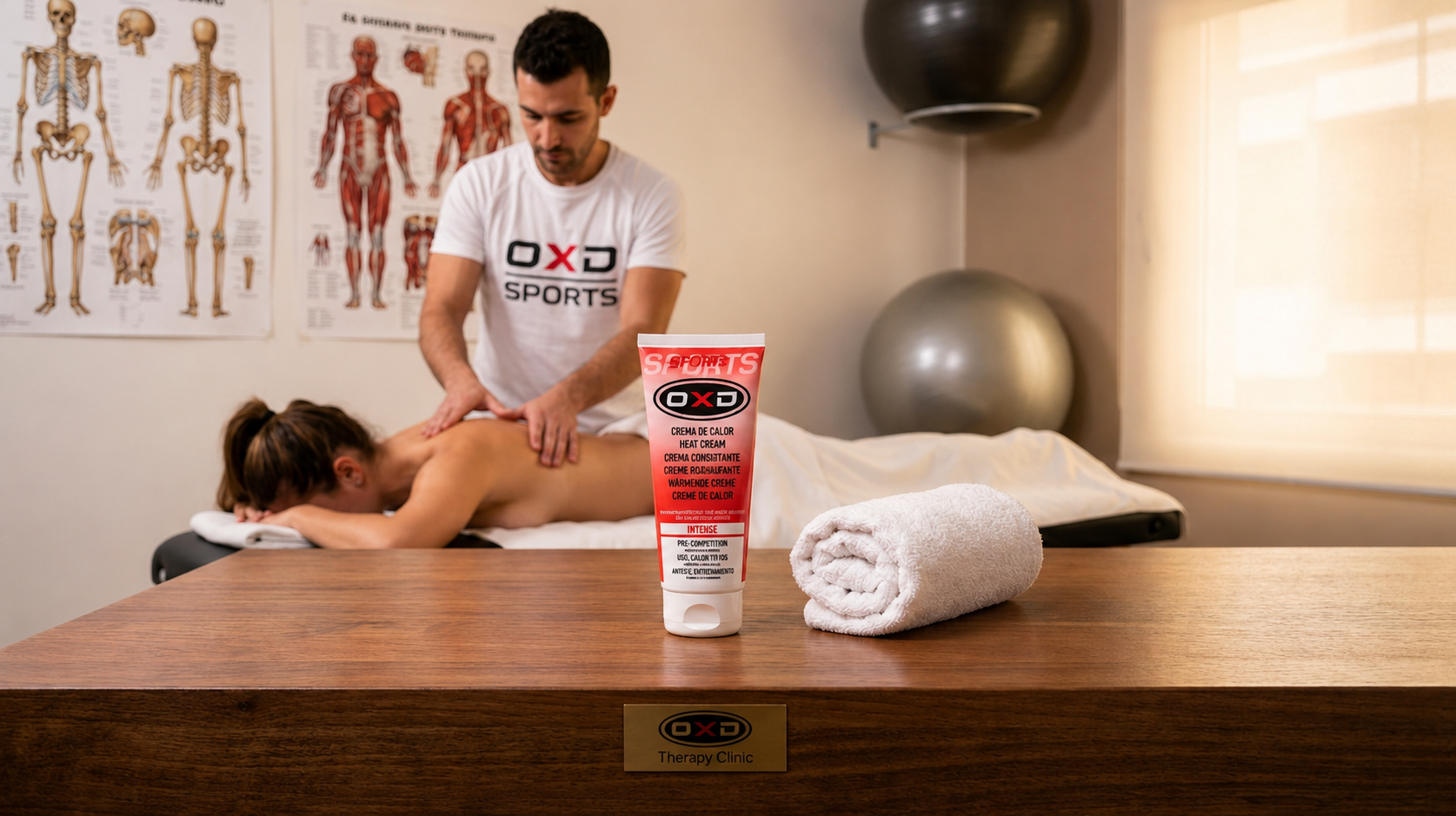 August 3, 2026
 -
Professional arnica gel: properties, benefits, and how to choose the right one
 July 8, 2026
 -
Anti-Cellulite Treatments: What Really Works and How to Apply Them in the Treatment Room
 June 8, 2026
 -
Warm roll-on wax for professional hair removal: types and how to choose the right one for your salon
 May 6, 2026


